
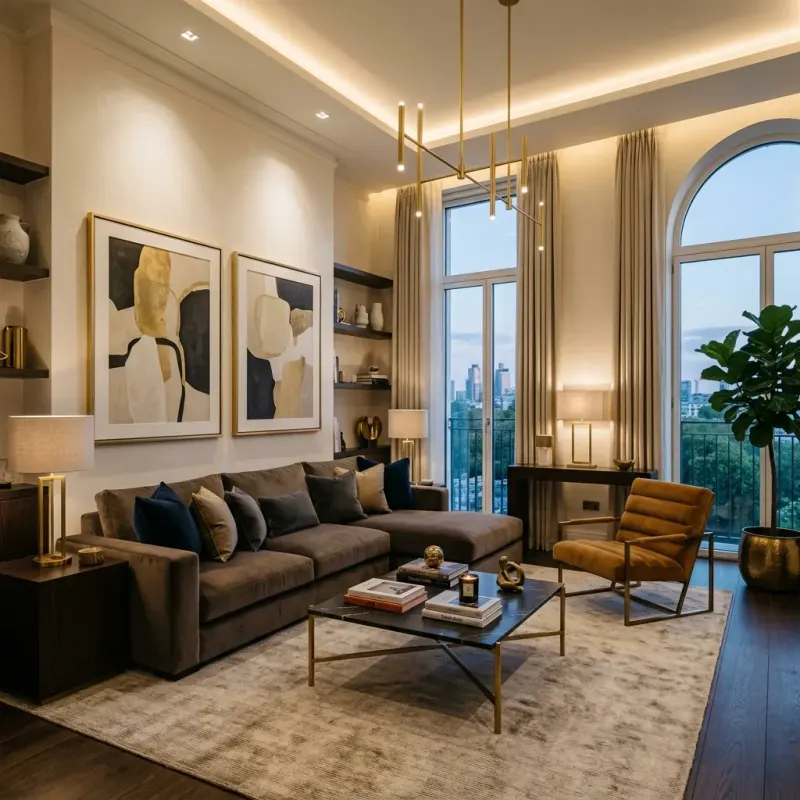
How to Make Your Home Look Expensive on a South African Budget
The most beautifully designed homes in the world share a surprising secret: the majority of what makes them look expensive has nothing to do with expensive furniture. It has to do with proportion, restraint, light, texture, and the quality of a few carefully chosen details. In 2026, the dominant interior design movement globally — and increasingly in South African homes — is "quiet luxury": a style defined not by flashy labels or maximalist displays, but by calm, considered spaces where every element feels intentional and every material rewards close inspection.
The great news for South African women working with realistic budgets is that quiet luxury is inherently about doing more with less. It prioritizes quality over quantity, curation over accumulation, and timelessness over trend. This guide gives you specific, actionable strategies for achieving a genuinely high-end look in your home — with price points and SA-specific sourcing suggestions for each.
1. Paint: The Most Impactful Rand You Will Ever Spend on Your Home
A can of quality interior paint is the single highest-return decorating investment available to a South African homeowner. The right paint choice can make a small room feel larger, a dark room feel lighter, and an outdated space feel immediately contemporary — for a fraction of the cost of new furniture.
Choose the right finish: Matte and eggshell finishes look the most expensive on walls — they absorb light rather than reflecting it, hiding surface imperfections and creating a soft, sophisticated depth. High-gloss paint on walls looks cheap in most residential contexts; reserve gloss for trim, skirting boards, and door frames where its durability and crispness are an asset.
The monochromatic wall-and-trim trick: Painting your walls, skirting boards, and door architraves in exactly the same colour — or in very closely related tones — is one of the most reliable high-end design tricks available. It creates a seamless, enveloping effect that makes rooms appear taller and more considered. This is a signature approach in many high-end South African show homes. It requires no additional products — just a deliberate choice to use one colour rather than the conventional white-trim contrast.
What colours work best: In South Africa, the most successful palette choices tend to be warm neutrals that work with our abundant natural light. Think warm white (Benjamin Moore's White Dove or Plascon's Timeless equivalents), warm greige (a blend of grey and beige that reads differently depending on the light), deep sage green, soft terracotta, and warm charcoal. These shades work beautifully with South African materials (timber, stone, rattan) and look equally good in bright summer light and during the softer winter months.
The accent wall alternative: If a full repaint is not in the budget, painting a single wall — ideally the wall behind a sofa, bed, or dining table — in a bold, considered colour creates a framed effect that makes the room feel designed rather than default. Dark colours (forest green, navy, terracotta) on a single wall are particularly effective in creating a sense of depth and intention.
SA sourcing: Plascon, Prominent Paints, and Dulux all offer excellent quality at accessible SA price points. For the most sophisticated colour accuracy, Plascon's ColourFutures range and Dulux's Colour of the Year collections offer trend-led shades with reliable pigment quality.
2. Update Your Hardware — The Jewellery of Your Home
Drawer pulls, cabinet handles, door knobs, tap fittings, and light switches are the jewellery of a home — small, frequently touched details that collectively define whether a space reads as generic or considered. In most South African homes — particularly rental properties and newly built developments — hardware is selected by builders for minimum cost: basic chrome pulls, standard white light switch plates, builder-grade fittings. Replacing these costs very little but has an outsized visual impact.
Kitchen and bathroom hardware: New cabinet handles and drawer pulls can completely transform the character of a kitchen or bathroom without replacing a single cabinet. A set of brushed brass or matte black D-bar handles on flat-fronted cabinets looks genuinely high-end and costs R30–R150 per handle at retailers like Leroy Merlin, Builders Warehouse, or online via Takealot. Calculate the total number of handles needed and budget accordingly — even 20 handles at R80 each is R1,600 for a transformation that looks like a R20,000 renovation.
Finishes to choose: Brushed gold (warm, luxurious, works with warm-toned interiors), matte black (graphic, modern, works with cooler palettes), brushed nickel (timeless, works with everything), and aged brass (character-rich, works with natural and heritage aesthetics) all read as premium. Chrome and polished silver hardware tend to read as budget — they are not inherently cheap, but their associations in the SA market are with builder-grade fittings.
Light switch plates: Replacing standard white plastic switch plates with metal alternatives in brushed brass or matte black is a change most people will not consciously notice — but which they will feel. It is the kind of detail that contributes to the subconscious sense that a home has been thoughtfully put together. Available at most SA electrical retailers and Leroy Merlin for R50–R200 per plate.
3. Master the Art of Layered Lighting
Nothing betrays a budget interior faster than a single overhead light illuminating a room harshly from above. Professional interior designers almost never rely on a single overhead source — they layer lighting from multiple angles and heights to create depth, warmth, and the flexibility to alter the atmosphere of a room depending on the time of day and mood required.
The three layers of lighting:
- Ambient (general) lighting: The base layer — recessed downlights, pendant lights, or ceiling-mounted fixtures that provide overall illumination. This layer should be on a dimmer switch in every living area.
- Task lighting: Focused, directional light for specific activities — a reading lamp beside a chair, under-cabinet lights in the kitchen, a desk lamp in the home office. These are placed where you need to see clearly.
- Accent lighting: Decorative lighting that creates atmosphere and highlights specific elements — table lamps on side tables, a floor lamp in a corner, LED strip lights behind a headboard, candles on a dining table. This layer is what transforms a room from functional to beautiful after dark.
The most impactful single change: Install a dimmer switch on your main living room light. This single intervention — which costs under R300 in most SA hardware stores and can be installed by any electrician in 30 minutes — transforms how the room feels in the evening. Dimmed warm light is genuinely luxurious in a way that bright overhead light simply cannot be.
Bulb choice matters: Always use warm white bulbs (2700–3000K colour temperature) in living areas, bedrooms, and dining rooms. Cool white bulbs (4000K+) belong in kitchens and bathrooms where clear, functional light is the priority. The difference in how a room feels with warm versus cool bulbs is dramatic.
Table lamps as room-changers: A pair of matching table lamps on bedside tables or either end of a sofa table will transform the feeling of a bedroom or living room more dramatically than almost any other single addition. Look for sculptural ceramic, wood, or rattan bases with simple linen shades at Mr Price Home, @home, or Lim's in Cape Town for accessible price points.
4. Invest in One Piece of Large-Scale Art
The single most common decorating mistake in South African homes is a cluttered gallery wall of small, mismatched frames — the default solution when no one is quite sure what art to choose. While a well-curated gallery wall can be beautiful, it requires significant skill to execute, and a poorly executed one reads as chaotic and unresolved.
The simpler, more powerful approach: one large, impactful piece of art on a prominent wall. A single canvas or print at 100cm × 100cm or larger reads as deliberate and sophisticated in a way that a collection of small frames never can. It anchors the room, creates a focal point, and demonstrates the confidence of restraint.
Where to find affordable large-scale art in SA:
- Whatiftheworld, Salon91, and online galleries: Original South African contemporary art from emerging artists — often more affordable than you expect.
- Instagram: Search #SouthAfricanArt or #SAartist to find emerging talent selling directly. Buying directly from the artist maximizes their return and minimizes yours.
- Student art shows: Fine art faculty shows at UCT, Wits, and UNISA regularly feature excellent original work at student prices.
- Digital prints + quality framing: Purchase a high-resolution digital art file from an online marketplace (Etsy has thousands of options from R100–R500), have it printed at a local print shop at A0 or A1 size, and have it framed by a local framer. Total cost: typically R500–R1,500 for a large, original-looking piece.
- Architectural/photography prints: A large-format black and white photograph of a South African landscape — the Cederberg, Drakensberg, Cape winelands, or a specific cityscape — is an eternally beautiful, affordable option that connects the space to local identity.
Hanging height: Art should hang so that its centre is at approximately 145–150cm from the floor — roughly eye level for a standing adult. Most South Africans hang art too high, which makes rooms feel top-heavy and disconnected from the furniture below.
5. Build Softness and Richness with Natural Textiles and Materials
Luxury is as much a sensory experience as a visual one. The materials we touch, the textures we see at close range, and the acoustic softness of a space all contribute profoundly to how we experience it. Natural materials — linen, cotton, wool, jute, wood, stone, leather, rattan — have an intrinsic quality and warmth that synthetic alternatives rarely replicate convincingly.
The most impactful textile upgrades:
- Linen curtains: Floor-length linen curtains hung from ceiling-height curtain rods (always hang them as high as possible, and as wide as the window or wider, to maximize the impression of height and light) transform a room dramatically. Linen's natural texture, slight drape imperfection, and the way it filters South African afternoon light is genuinely beautiful. Affordable linen-look curtains are available at Mr Price Home, @home, and Woolworths Home.
- A quality area rug: A rug anchors a seating or dining area, adds warmth underfoot, reduces echo, and defines the space. It is one of the most transformative investments in any room. Choose natural materials where budget allows — jute, wool, or cotton. Size is critical: a rug that is too small (the most common mistake) makes a room look disjointed. In a living room, all four legs of the sofa should ideally be on the rug, or at minimum the front two legs.
- Cushions in quality fabrics: Replace cheap polyester cushion covers with covers in linen, cotton velvet, or woven fabric. A set of four to six cushions in a cohesive palette with varied textures (smooth velvet + textured weave + solid linen) adds significant visual richness for very little money.
- Throws: A generously sized throw draped casually over a sofa or chair adds a layer of softness and texture that makes a space feel lived-in and inviting. Wool and cotton throws are warmer in South African winters and look far more expensive than their acrylic equivalents.
6. Edit Ruthlessly — Negative Space is a Luxury
The most expensive-looking homes in the world are almost never the most filled homes. Restraint — displaying fewer, better things with deliberate space between them — is perhaps the clearest signal that a space has been designed rather than accumulated. Negative space (empty space around objects) allows each piece to be seen and appreciated individually. Clutter, by contrast, forces the eye to work hard to separate and evaluate what it is seeing, which is experienced as visual stress.
The editing process:
- Remove everything from a surface. Put back only what you genuinely love or need. Whatever does not make it back earns a donate box or a storage spot out of sight.
- The "rule of three": odd numbers of objects tend to look more intentional than even numbers. Group items in threes — varying heights, scales, and textures — for a composed, designer effect.
- Contain small items: charging cables, remote controls, keys, and stationery create instant visual clutter. Baskets, trays, and boxes corral these items and give them a home without eliminating them from the room.
- Clear countertops: in kitchens and bathrooms, clear countertops are the single most impactful step toward a high-end look. Store away everything that is not used daily.
A beautifully organized kitchen is the natural companion to a well-designed home — read our guide to kitchen organization for maximum efficiency for practical strategies to declutter and streamline the heart of your home. And if you are bringing the outdoors in, our indoor plant guide will help you add life and texture to any room with minimal effort.