
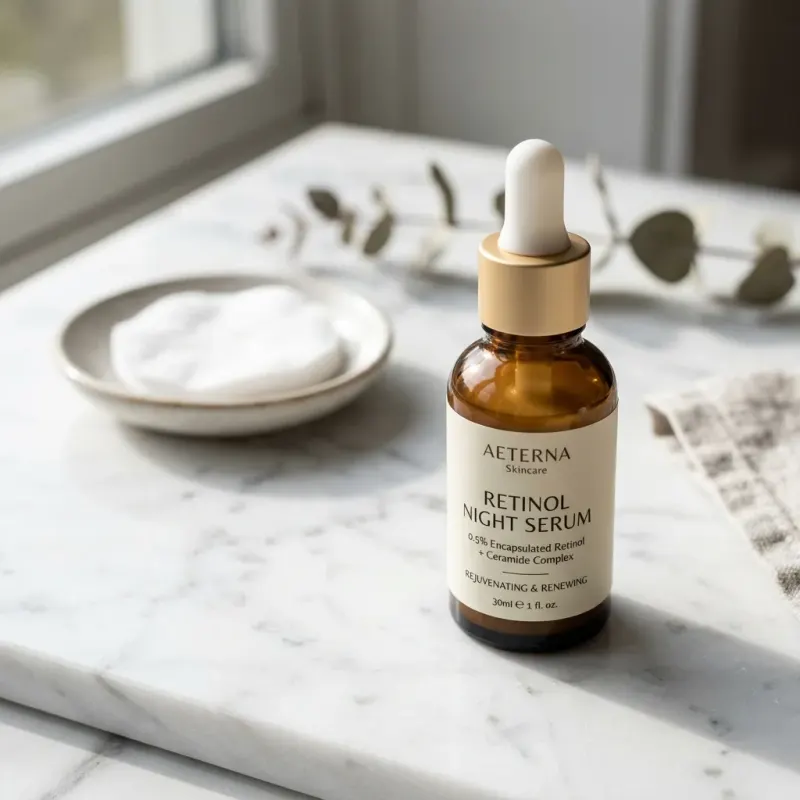
Unlock the Power of Vitamin A for Your Skin
Retinol is often hailed as the "gold standard" in skincare, and for very good reason. Backed by decades of clinical research, it remains one of the most powerful anti-aging, acne-fighting, and skin-renewing ingredients available without a prescription. Yet for many South African women, the word "retinol" still triggers anxiety — fear of flakiness, redness, or simply not knowing where to begin. If that sounds like you, this guide will walk you through everything you need to know to start your retinol journey safely, confidently, and with real results.
What Exactly is Retinol? Understanding the Retinoid Family
Retinol is a derivative of Vitamin A and belongs to the broader family of compounds called retinoids. When applied to the skin, retinol is converted by skin enzymes first into retinaldehyde, and then into retinoic acid — the active form that your skin cells actually use. It is this conversion process that makes over-the-counter retinol gentler than prescription-strength tretinoin (which is already in its active retinoic acid form).
Here's a quick breakdown of the retinoid family, from gentlest to strongest:
- Retinyl Esters (e.g., Retinyl Palmitate): The mildest form. Ideal for complete beginners or very sensitive skin. Requires multiple conversion steps, so results are subtle but side effects are minimal.
- Retinol: The sweet spot for most people. Effective, widely available in SA at pharmacies and beauty counters, and well-tolerated when introduced correctly.
- Retinaldehyde (Retinal): Significantly more potent than retinol but still available without a prescription. Converts to retinoic acid in just one step, meaning faster results with somewhat more potential for irritation.
- Tretinoin (Retinoic Acid): Prescription-only in South Africa. The most potent and fastest-acting. Dermatologist-supervised use is essential.
For this guide, we will focus on retinol — the perfect starting point for the vast majority of South African women looking to transform their skin.
What Does Retinol Actually Do for Your Skin?
Retinol works on a cellular level in several key ways that no other over-the-counter ingredient can match:
- Accelerates Cell Turnover: It speeds up the natural shedding of old, dull skin cells and the emergence of fresh, new ones — giving you a brighter, more even complexion over time.
- Stimulates Collagen Production: Retinol signals the fibroblast cells in your dermis to produce more collagen, which plumps the skin and visibly reduces the depth of fine lines and wrinkles.
- Fades Hyperpigmentation: By disrupting the pathway of melanin (pigment) production, retinol gradually lightens sunspots, post-acne marks, and uneven skin tone — a crucial benefit for many South African women dealing with sun-induced pigmentation.
- Decongests Pores: It prevents dead skin cells and sebum from clumping together inside your pores, making it highly effective for treating and preventing acne and blackheads.
- Refines Skin Texture: With consistent use, skin becomes smoother, more refined, and has a healthy, almost luminous quality that is hard to achieve with any other ingredient.
Who Should (and Shouldn't) Use Retinol?
Retinol is suitable for most skin types, including oily, combination, and normal skin. Even sensitive skin types can often use retinol successfully with the right introduction strategy. However, there are exceptions:
- Pregnant or breastfeeding women should avoid all retinoids. Consult your doctor immediately if you discover you are pregnant while using retinol.
- People with active eczema, rosacea, or perioral dermatitis should consult a dermatologist before starting, as retinol may trigger flares.
- Teens under 18 should speak to a dermatologist before using retinol. For acne in younger skin, there are often better first-line treatments.
The good news? For most women in their mid-20s and beyond, retinol is not just safe — it is genuinely one of the best investments you can make in your skin's long-term health.
Step-by-Step: How to Introduce Retinol Into Your Routine
The number one mistake people make is going too hard, too fast. Rushing retinol is a recipe for unnecessary irritation. Here is a proven, gradual introduction strategy:
- Step 1 — Start Low and Slow: Begin with the lowest available concentration — typically 0.025% to 0.1%. Use it just once per week for the first two weeks. Your skin needs time to upregulate the enzymes that process retinol. This isn't optional; it's essential.
- Step 2 — The Sandwich Method (Game-Changer for Sensitive Skin): Apply a light, hydrating moisturizer to clean, dry skin first. Then apply a pea-sized amount of retinol. Finish with another thin layer of moisturizer. This "sandwiching" buffers the retinol, dramatically reducing the risk of irritation without significantly diminishing its long-term effectiveness.
- Step 3 — Apply to Completely Dry Skin: Wait at least 20 minutes after cleansing before applying retinol. Damp skin increases absorption and, therefore, the risk of irritation. This one step makes a remarkable difference.
- Step 4 — Nighttime Only, Every Time: Retinol degrades in sunlight and increases your skin's sensitivity to UV radiation. It belongs exclusively in your evening routine. Never, under any circumstances, apply it before sun exposure.
- Step 5 — Use a Pea-Sized Amount: Genuinely pea-sized. This tiny amount is sufficient for your entire face and neck. More product does not equal faster results; it only equals more irritation.
- Step 6 — Gradually Increase Frequency: After two weeks of once-weekly use with no significant irritation, move to twice weekly. After another two to four weeks, try every other night. The goal over several months is nightly use — though many people find every other night to be their sweet spot indefinitely.
What is "Retinization" and How to Manage It
During the first four to six weeks of using retinol, you may experience some dryness, mild flakiness, or temporary redness. This is called retinization — your skin literally adapting to the ingredient. It is completely normal and is not a sign that retinol is "too strong" for you. It is a sign that it is working.
To manage retinization effectively:
- Increase your moisturizer usage dramatically. Consider applying a thick, occlusive balm (like Vaseline or a ceramide-rich barrier cream) over your entire retinol routine at night.
- Temporarily reduce retinol frequency if irritation is severe. Go back to once weekly until things settle.
- Avoid all other active ingredients (AHAs, BHAs, Vitamin C) during the initial adaptation period.
- Drink more water. Hydrated skin handles retinol far better than dehydrated skin.
Ingredients to Never Mix with Retinol in the Same Routine
Some ingredient combinations actively interfere with retinol's stability or compound its irritation potential. Avoid using these in the same evening routine as your retinol:
- Vitamin C (L-Ascorbic Acid): Use Vitamin C in your morning routine, retinol at night. They work best in different pH environments.
- AHAs (Glycolic, Lactic Acid) and BHAs (Salicylic Acid): Using exfoliating acids and retinol together is a fast track to a compromised skin barrier. Alternate evenings if you use both.
- Benzoyl Peroxide: It can oxidize retinol, rendering it inactive. Apply separately or on alternating nights.
Safe to use together with retinol: Hyaluronic acid, niacinamide (in some formulations), peptides, and ceramides. These are your retinol routine's best friends.
When Will You See Results? A Realistic Timeline
Patience is the single most important ingredient in a retinol routine. Here is a realistic timeline for what to expect:
- Weeks 1–4: Possible retinization (dryness, mild peeling). You may notice skin looking temporarily worse before it gets better — this is normal.
- Weeks 4–8: Pore size begins to visibly reduce. Skin texture starts to feel smoother. Breakouts may improve.
- Weeks 8–12: Significant improvement in fine lines and skin tone. Hyperpigmentation begins to fade noticeably.
- Months 6+: The real magic. Consistent long-term use delivers the most profound anti-aging and skin-renewing results that no other over-the-counter ingredient can replicate.
The Non-Negotiable: Daily SPF When Using Retinol
We cannot stress this enough — under the intense South African sun, daily broad-spectrum SPF 50 is not optional when you are using retinol. Retinol significantly increases your skin's sensitivity to UV radiation. Skipping sunscreen while on retinol will undo all its benefits, worsen pigmentation, and increase your skin cancer risk. Apply SPF every single morning, rain or shine, indoors or outdoors. This is the cornerstone of any effective skincare routine. Avoid other common skincare mistakes that sabotage your results.
Local South African Retinol Recommendations
You do not need to spend a fortune on imported retinol products. South Africa has excellent, scientifically-formulated options at accessible price points. Our guide to Affordable Local Beauty Brands covers the best local retinol serums and creams that deliver real results without the imported price tag.
Frequently Asked Questions About Retinol
Can I use retinol around my eyes?
Yes, but with extra caution. The skin around your eyes is significantly thinner. Use the tiniest amount, apply it around the orbital bone (not directly on the lids), and always use the sandwich method in this area.
Can I use retinol in summer?
Absolutely — with strict daily SPF. Many dermatologists actually recommend taking a retinol break during peak summer months if you spend a lot of time outdoors. The crucial rule is: retinol at night, SPF in the morning, every single day without exception.
My skin has been "purging" — should I stop?
Purging (a temporary increase in breakouts as retinol accelerates cell turnover) is normal and typically resolves within 4–6 weeks. If new breakouts are appearing in areas where you have never had acne before, that may be irritation rather than purging, and you should reduce frequency and consult a dermatologist.
Is more expensive retinol always better?
Not necessarily. The concentration and the delivery system (how the retinol is encapsulated) matter more than the price tag. Many affordable local brands use encapsulated retinol technology that is just as effective and far less irritating than high-percentage products from luxury brands.
Retinol is genuinely one of the most transformative skincare ingredients available today. By introducing it slowly, protecting your skin with SPF, and staying consistent for at least three months, you will understand why dermatologists have recommended it for over 40 years. Your best skin is not behind you — it's ahead.