
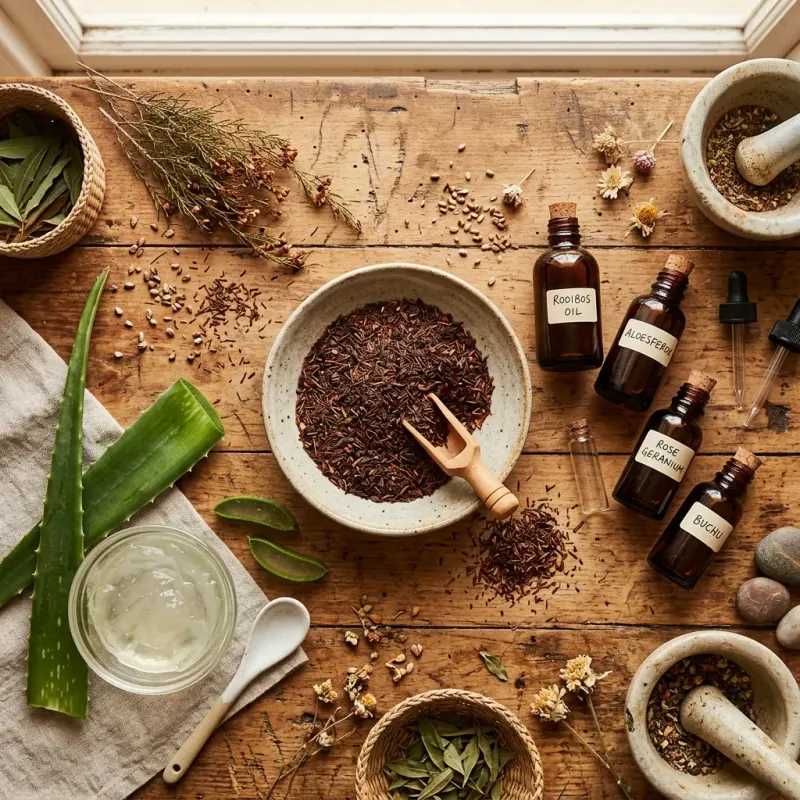
Embrace Homegrown Botanical Secrets for a Radiant Complexion
South Africa is not only one of the world's most biodiverse nations — it is also one of the most underrated sources of world-class skincare ingredients. The fynbos biome of the Western Cape alone contains over 9,000 plant species, many of which have been used by indigenous communities for centuries to heal, protect, and beautify the skin. Today, cutting-edge cosmetic science is catching up with this ancient wisdom, and the global beauty industry is increasingly turning to our shores for its most potent natural actives. The best part? As South African women, we have direct, affordable access to these botanical powerhouses right here at home.
This guide covers the most clinically significant South African skincare ingredients — what they do, why the science supports them, how to use them in your routine, and which local products to look for.
1. Rooibos (Aspalathus linearis): The Antioxidant Powerhouse
Rooibos is arguably South Africa's most iconic botanical export, and its benefits extend far beyond your afternoon teacup. Grown exclusively in the Cederberg mountains of the Western Cape, this humble shrub produces leaves that are among the richest natural sources of antioxidants in the world.
What the science says: Rooibos contains a unique flavonoid called aspalathin — found in no other plant on earth — as well as nothofagin, quercetin, and luteolin. These antioxidants neutralize free radicals (the unstable molecules that damage skin cells and accelerate aging). It also contains zinc, which regulates oil production, and alpha-hydroxy acid in trace amounts, which gently assists in cell turnover.
Skin benefits include:
- Powerful anti-inflammatory action, making it ideal for calming redness, rosacea, and reactive skin.
- Antimicrobial properties that help reduce acne-causing bacteria on the skin's surface.
- Protection against UV-induced oxidative stress — a crucial benefit under the South African sun.
- Visibly evening out skin tone and reducing the appearance of hyperpigmentation over time.
- Naturally hypoallergenic — suitable for even the most sensitive skin types.
How to use it: Brew a strong cup of rooibos tea, allow it to cool completely in the fridge, and use it as a refreshing morning facial toner — a completely free, all-natural hack. Alternatively, look for rooibos as a key listed ingredient in locally formulated serums, moisturizers, and toners. Brands like African Extracts and SKOON. Skin use it prominently.
2. Marula Oil: South Africa's Liquid Gold
If you have not added Marula oil to your skincare routine, you are missing out on one of the most extraordinary oils nature has ever produced. Derived by cold-pressing the kernels of the Marula fruit (Sclerocarya birrea) — the same fruit made famous by elephants in the Limpopo bushveld — this oil has been used by women across Southern Africa for thousands of years to protect their skin from the harsh elements.
What the science says: Marula oil contains approximately 70% oleic acid (omega-9 fatty acid) and 4–7% linoleic acid (omega-6). This fatty acid profile is remarkably close to the skin's own natural sebum, which is why it absorbs so rapidly without feeling greasy. Critically, it contains more antioxidants per gram than celebrated argan oil, along with significant concentrations of Vitamins C and E.
Skin benefits include:
- Intense, fast-absorbing hydration that does not clog pores — making it suitable even for oily and combination skin types.
- Powerful protection against environmental damage, pollution, and UV-induced free radicals.
- Reduces the appearance of fine lines and restores elasticity in mature or sun-damaged skin.
- Soothes and reduces redness in inflamed or irritated skin.
- Excellent for conditioning and strengthening the hair and nail cuticles as a bonus multi-use product.
How to use it: Apply 3–5 drops of pure, cold-pressed marula oil to your face after your moisturizer as the final step in your evening routine. It can also be mixed into your day cream for an extra hydration boost in winter. When shopping, look for "cold-pressed" or "unrefined" on the label to ensure maximum nutrient retention. The brand Lulu & Marula is named after this iconic ingredient — explore their range for authentic, high-quality applications.
3. Aloe Vera (Aloe ferox): The Great South African Soother
While Aloe vera is a globally recognized ingredient, South Africa is home to its most potent native variety — Aloe ferox (Cape aloe or bitter aloe), which grows prolifically in the Eastern Cape and KwaZulu-Natal. Cape aloe is documented to contain significantly higher concentrations of active compounds than the commercially grown Aloe barbadensis miller found in most international products.
What the science says: Aloe gel contains over 200 biologically active compounds, including vitamins B1, B2, B3, B6, C, and E, minerals, enzymes, amino acids, and salicylic acid. Two polysaccharides — acemannan and glucomannan — are responsible for its remarkable healing and hydrating properties. Aloe also contains aloesin, a compound clinically shown to inhibit melanin synthesis, making it effective for lightening post-inflammatory hyperpigmentation.
Skin benefits include:
- Instant soothing and cooling of sunburned, heat-stressed, or post-procedure skin.
- Deep hydration without any added oils — perfect for oily and acne-prone skin types.
- Accelerates the healing of minor wounds, cuts, and acne lesions.
- Reduces the appearance of dark spots and post-acne marks over time.
- Calms and heals skin irritated by retinol, AHAs, or other active ingredients.
How to use it: Pure aloe gel (99–100% aloe) can be used as a lightweight moisturizer on its own for oily skin types, or applied as a soothing serum layer under your main moisturizer. Keep a bottle in the fridge — cold aloe gel on sunburned or irritated skin is one of life's simple skincare pleasures.
4. Baobab Oil: The Tree of Life in a Bottle
The Baobab (Adansonia digitata) — Africa's most iconic tree, living for thousands of years and storing thousands of litres of water in its trunk — produces a seed oil so nutrient-dense that it is increasingly referred to as the "miracle oil of the 21st century" by cosmetic chemists.
What the science says: Baobab oil has an exceptionally well-rounded fatty acid profile, with roughly 36% oleic acid, 33% linoleic acid, and 25% alpha-linolenic acid (omega-3). This omega-3 content is unusual in a plant seed oil and gives baobab oil remarkable skin-healing and anti-inflammatory properties. It is also rich in Vitamins A, D, E, and F — a combination that supports collagen synthesis, cell regeneration, and long-term elasticity.
Skin benefits include:
- Exceptional moisturization for dry, cracked, or mature skin — it absorbs beautifully without residue.
- Visibly improves skin elasticity with consistent use, making it popular for use on the face, neck, décolletage, and body.
- Reduces the appearance of stretch marks and scarring when used regularly over several months.
- Supports the skin's barrier function, helping to lock in moisture in cold, dry Highveld winters.
- Safe and nourishing during pregnancy for stretch mark prevention — unlike many essential oils, which should be avoided.
How to use it: Warm 3–5 drops between your palms and press into damp skin after a shower for a silky, nourishing body treatment. For the face, use it as the final step in your evening routine, focusing on the neck and décolletage area, which is often neglected.
5. Buchu (Agathosma betulina): The Ancient Fynbos Healer
Buchu is one of the oldest documented medicinal plants in southern Africa, used by the Khoi and San people for thousands of years before any formal science existed to explain why. This small, aromatic shrub grows exclusively in the Western Cape mountains and produces an extract with remarkable antimicrobial and anti-inflammatory properties.
What the science says: Buchu extract contains diosphenol (a powerful antimicrobial), flavonoids (anti-inflammatory and antioxidant), and quercetin (one of the most potent naturally occurring anti-inflammatory compounds known to science). It has been clinically studied for its ability to inhibit the growth of acne-causing bacteria (Cutibacterium acnes) and Staphylococcus aureus, making it a legitimate natural alternative to some synthetic anti-acne actives.
Skin benefits include:
- Deep antimicrobial cleansing — helps to declog pores and reduce bacterial populations on the skin's surface.
- Reduces redness and swelling in active breakouts, cystic acne, and inflamed skin conditions.
- Antioxidant protection against daily environmental stressors.
- Tones and tightens the appearance of pores over time.
How to use it: Look for buchu as a listed ingredient in toners, serums, and spot treatments from South African brands like SKOON. Skin. Because of its potency, pure buchu essential oil should always be diluted in a carrier oil (like Marula or Baobab) before applying to skin.
Bonus: Two More SA Ingredients Worth Knowing
Honeybush (Cyclopia genistoides): A close relative of rooibos, also grown in the Western Cape. Rich in the flavonoid hesperidin, which is being researched for its ability to reduce inflammation, brighten the complexion, and protect collagen from degradation. It appears frequently in South African-formulated anti-aging products.
Cape Chamomile (Eriocephalus punctulatus): Distilled from a South African daisy that is botanically different from European chamomile but far richer in the active compound bisabolol — a well-documented anti-inflammatory and skin-calming agent. Used in premium South African facial oils for sensitive and reactive skin types.
How to Identify Authentic SA Botanical Ingredients
When shopping for products featuring these ingredients, look for their botanical (Latin) names on the ingredient list — brands that use the proper INCI nomenclature tend to be more transparent about ingredient quality and sourcing. Also look for:
- "Ethically harvested" or "sustainably sourced" labels, particularly for ingredients like rooibos and marula, which have been subject to over-harvesting concerns.
- "Cold-pressed" for oils — this means they were extracted without heat, preserving the full spectrum of nutrients.
- Short ingredient lists with the SA botanical ingredient listed high (i.e., in the first five ingredients) — this indicates meaningful concentration rather than a token inclusion.
The Bigger Picture: Why Choosing SA Botanicals Matters
By actively seeking out and purchasing skincare products that feature South African botanical ingredients, you contribute directly to an ecosystem of benefits that extends far beyond your bathroom shelf. You support local beauty brands built by South African women, sustain the livelihoods of rural communities involved in ethical harvesting, contribute to the conservation of indigenous plant biodiversity, and reduce the carbon footprint of your beauty routine. It's beauty with purpose — and it works extraordinarily well.