
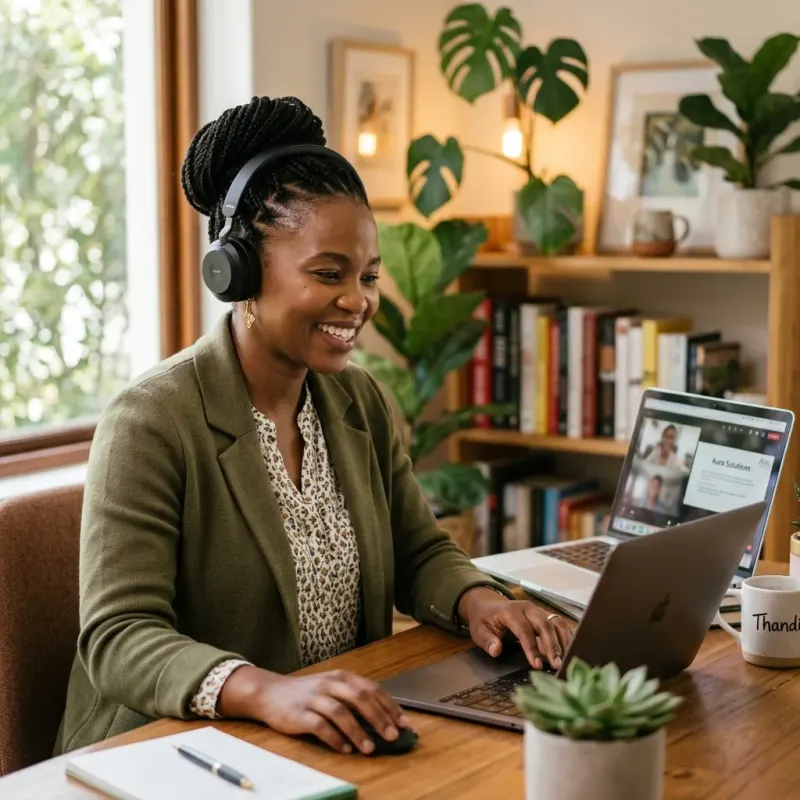
Transcription is one of the few remote jobs where the barrier to entry is genuinely low and the work is genuinely real. You need good English, accurate typing, a decent pair of headphones and patience. You do not need a qualification, a portfolio, or anyone's permission. That combination makes it one of the most practical starting points for South African women who want to earn from home, and it pairs naturally with the other entry-level route, remote data entry work.
It is also work that people quit in the first fortnight, because the first few files are much slower than expected. This guide is about setting your expectations correctly and then choosing the right platform.
What the Work Involves
You listen to an audio or video file and type what is said. Beyond that, the job splits into distinct types with quite different pay:
- General transcription. Interviews, podcasts, meetings, lectures. The bulk of available work.
- Clean verbatim versus full verbatim. Clean verbatim removes the stumbles and filler words. Full verbatim keeps every hesitation and false start. Full verbatim is slower and should pay more.
- Captioning and subtitling. Transcription plus timing the text to the video. A useful step up in rate once you are competent.
- Post-editing machine transcripts. Increasingly common. Software produces a rough transcript and you correct it. Faster per file, usually lower per-word rate. Whether it is worth it depends entirely on how bad the audio is.
- Specialist transcription. Legal, medical and academic work pays significantly better and needs the relevant vocabulary.
The Ratio Nobody Warns You About
A beginner typically needs four to six hours to transcribe one hour of audio. Experienced transcriptionists get that down to around three, and to roughly two on clean, single-speaker audio. This ratio, not the advertised per-audio-minute rate, decides what you actually earn.
It follows that audio quality is the most important thing you can assess before accepting a file. A crisp one-on-one interview at a good rate is worth far more than a poorly recorded four-person meeting at a higher rate. Learn to preview files and decline bad ones. That single habit separates people who make this work from people who give up.
Platforms That Take South Africans
- Rev is one of the largest and best known. It has a screening test, work is claimed from an open queue, and quality ratings determine what you can access.
- TranscribeMe splits audio into short segments, which makes it far less daunting to start and easy to fit into small pockets of time.
- GoTranscript accepts applicants worldwide and handles transcription and translation work.
- Scribie works on a review-and-correct model, which is a gentler introduction than transcribing from scratch.
- Verbit and its captioning arm take on captioning and subtitling contractors.
- Happy Scribe and similar tools hire people to correct machine transcripts.
- Upwork and Fiverr let you set your own rate and build repeat clients, which is where the real money in transcription eventually sits. Slower to start, much better ceiling.
- Local agencies and researchers. South African academics, market research firms and law practices all need transcription and often prefer someone who understands local accents, names and terminology. This is an underrated route and frequently pays better than the global platforms.
What It Pays, Honestly
Global platforms generally pay per audio minute rather than per hour worked, which is why the beginner ratio matters so much. Rates are modest at entry level and rise as your accuracy rating improves and better-paying files unlock. Specialist work and direct clients pay materially more than open marketplaces.
The realistic path is this: start on a platform to build speed and a track record, then move toward direct clients where you set the rate. Most people who earn well from transcription in South Africa are not on the beginner queues any more. They have a handful of repeat clients who send them work directly.
Because international platforms pay in dollars or pounds, the exchange rate helps. Set up PayPal, Payoneer or Wise before you start earning, and check the fee on smaller payouts.
The Kit You Actually Need
- Closed-back headphones. Not earbuds. This is the single upgrade that most improves your speed, because you stop rewinding to catch unclear words.
- A foot pedal if you decide to do this seriously. It lets you pause and rewind without taking your hands off the keyboard and is a genuine speed multiplier.
- Free transcription software such as oTranscribe or Express Scribe, which give you keyboard shortcuts for playback control and variable speed.
- A text expander for phrases you type constantly.
- Reliable power and connectivity. Losing a partially completed file to load shedding is demoralising and avoidable. Our guide on working remotely through load shedding covers the practical options.
How to Get Faster
Typing speed helps, but comprehension speed helps more. Practise on podcasts in an accent you find difficult. Build a personal glossary of South African place names, company names and terms so you stop looking them up. Use playback at slightly reduced speed rather than constantly rewinding. And always run a final read-through of the transcript with the audio off, because the errors you make are usually ones that sound right but read wrong.
Avoiding the Scams
Legitimate transcription platforms never charge you to join, never ask for a registration or software fee, and never require you to buy equipment through them. Be wary of any transcription job advertised on WhatsApp with a daily earnings promise attached. Our guide on spotting fake remote jobs in South Africa covers the warning signs in full.
Frequently Asked Questions
How long does it take to transcribe one hour of audio?
Beginners usually need four to six hours per audio hour. With practice that drops to around three, and to roughly two on clean, single-speaker recordings. Audio quality affects this more than your typing speed does, which is why previewing and declining poor recordings matters so much.
Do I need experience or a qualification to start transcription work?
No. Most platforms have an entry test covering grammar, accuracy and their style guide, but no formal qualification is required. Specialist legal and medical transcription is the exception, since it needs the relevant vocabulary, and it pays accordingly.
Which transcription platforms accept South Africans?
Rev, TranscribeMe, GoTranscript and Scribie all accept applicants internationally, and Upwork and Fiverr let you work with clients directly. Do not overlook local demand either, since South African researchers, market research firms and law practices need transcription and often pay better than the global marketplaces.
Is transcription still worth doing now that AI can transcribe audio?
Yes, though the work has shifted. A growing share of it is correcting machine transcripts rather than typing from scratch, and automatic transcription still struggles badly with overlapping speakers, poor audio, strong accents and specialist terminology. That is exactly where human transcriptionists are still needed, and it is why accuracy is now worth more than raw typing speed.