
A South African CV has specific conventions that differ from the United States or United Kingdom — and getting them wrong can cost you interviews before you even know you are being considered. In 2026, with Applicant Tracking Systems (ATS) screening CVs before a human ever reads them, the format and keywords you choose are as important as the content. This guide tells you exactly how to structure, write, and optimise your CV for the South African job market.
How Long Should Your SA CV Be?
South African convention is longer than American convention:
- Entry-level (0–3 years experience): 2 pages maximum
- Mid-career (4–10 years): 3 pages is acceptable and common
- Senior / executive: 3 to 4 pages. A Managing Director with 20 years of experience should not be trying to squeeze into 2 pages.
The American 1-page rule does not apply in South Africa. However, padding a 2-page CV to 4 pages with filler is worse than being concise. Every line should earn its place.
What to Include in a South African CV
1. Personal Details
At the top of your CV, include:
- Full name
- Phone number (cell)
- Professional email address
- City and province (full home address is optional and increasingly omitted for privacy)
- LinkedIn profile URL (if up to date)
- Nationality (required for EEA reporting)
- ID number: optional — many candidates include it to simplify background checks, but you are not obligated to. If you include it, use only on the CV you intend to submit (not on public profiles)
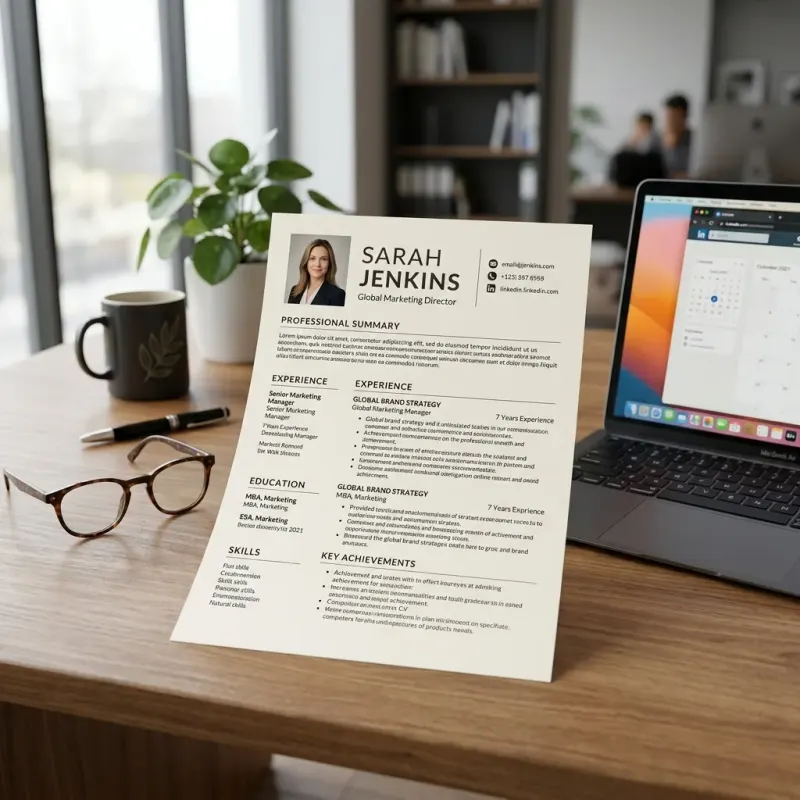
Photo: Unlike European convention, photos are still common on SA CVs and are not inherently problematic. They are not required. If you choose to include one, use a professional headshot (business attire, neutral background, no selfies).
2. Professional Summary (3–5 Lines)
A brief paragraph below your personal details that summarises who you are professionally and what you bring. Tailor this for every application. Avoid clichés like "hardworking team player" and instead use specific, differentiated language:
"Financial analyst with 6 years of experience in the SA banking sector, specialising in credit risk modelling and IFRS 9 provisioning. Proven track record of building Power BI dashboards that reduced reporting time by 40% at Nedbank. Seeking a senior analytical role in financial services or consulting."
3. Work Experience (Reverse Chronological Order)
List your most recent role first. For each role, include:
- Job title, company name, dates (month and year)
- A 2-line description of the role's purpose and scope
- 3 to 5 bullet points of achievements using the PAR method: Problem / Action / Result
Achievements beat duties every time. "Managed supplier relationships" is a duty. "Renegotiated packaging supplier contracts, reducing annual spend by R850,000" is an achievement.
4. Education
List in reverse chronological order: degree/qualification, institution, graduation year. Include your matric results only if you are a recent graduate with limited work experience. Include your NQF level if applying for regulated roles.
5. Skills Section
Include a concise list of technical skills (software, tools, languages, certifications) and group them logically. This section is critical for ATS keyword matching.
6. Professional Development / Certifications
List relevant courses, certifications, and short courses. Include the year.
7. References
In South Africa, it is standard to include 2 to 3 references with full contact details. "References available on request" is outdated and wastes space. Include: reference name, job title, company, phone number, and email. Ensure you have asked permission before listing anyone as a reference.
What NOT to Include
- A photograph that looks like a social media selfie
- Your full home address (city and province is enough)
- Marital status, number of children, or religion (you are not legally required to disclose these)
- Matric subjects and marks if you have a degree
- Hobbies that do not add value ("I enjoy reading and socialising")
- References from family members
- Objective statements that are solely about what you want ("I am looking for a challenging role where I can grow") — replace with a professional summary focused on what you offer
Optimising for ATS Systems
Most large SA employers (banks, corporate groups, mining houses, government) use ATS software that scans your CV for keywords before a human reads it. To pass ATS screening:
- Use a clean, simple format — no tables, text boxes, or graphics that ATS cannot read
- Mirror the exact keywords from the job advertisement in your CV (if the ad says "Agile methodology," use that exact phrase — not "Scrum")
- Save your CV as a Word document or PDF (Word is safer for ATS parsing)
- Use standard headings: "Work Experience," "Education," "Skills" — not creative alternatives like "My Journey"
Cover Letter
Always submit a cover letter unless the application specifically says not to. Keep it to one page. The structure: opening hook (why this company, why this role), 2 to 3 specific points linking your experience to the job requirements, and a clear call to action. A tailored cover letter significantly increases interview conversion rates.
Frequently Asked Questions
Should I include my race on my SA CV?
You are not required to disclose your race on a CV. However, many SA employers request it for Employment Equity Act reporting purposes, and some online application systems have a mandatory field for it. If the company's application process requires it, disclose it there — you do not need to include it on the CV itself.
My career has gaps — how do I handle them on my CV?
Be honest but strategic. Use years only (not months) for employment dates to reduce the visual prominence of short gaps. For longer gaps, add a brief line: "Career break — family caregiving" or "Personal development — completed Google Data Analytics Certificate." Recruiters in 2026 are far less judgmental about gaps than they were a decade ago, especially post-COVID. Read our guide to explaining career gaps for detailed language and framing strategies.