
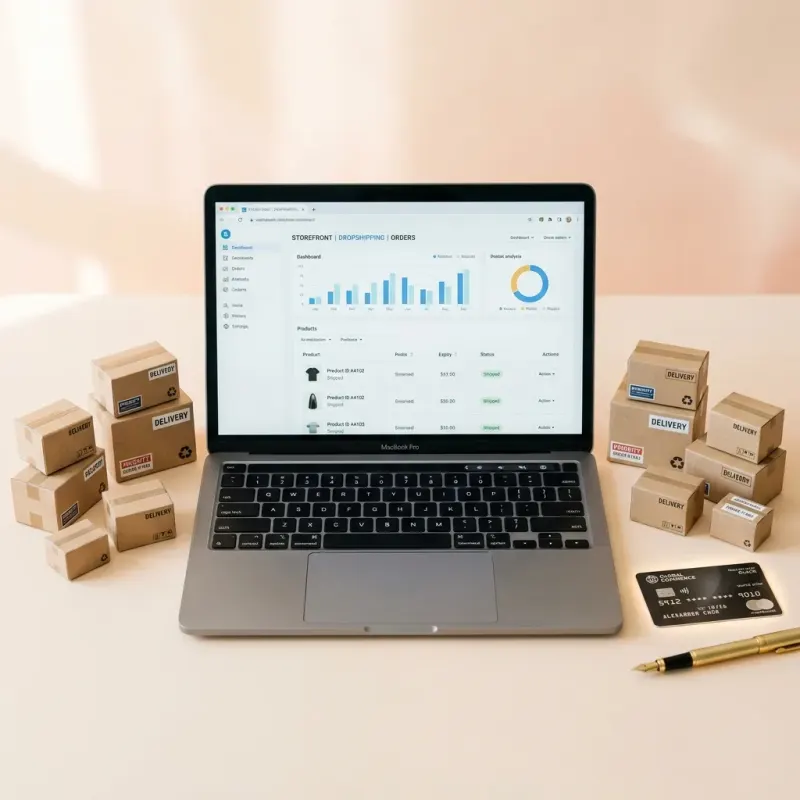
Dropshipping — selling products online without holding stock — is one of the most popular low-entry-cost business models globally. In South Africa, the model works but comes with specific challenges that most generic dropshipping guides do not address: long international shipping times, customs duties, exchange rate risk, and the unique dynamics of the SA e-commerce market. This guide covers everything you need to know to start a profitable dropshipping business in South Africa in 2026.
How Dropshipping Works
In a dropshipping model:
- You list products for sale on your online store at your chosen retail price
- A customer places an order and pays you
- You forward the order to your supplier at the wholesale price
- The supplier ships directly to the customer
- You keep the margin (retail price minus wholesale price)
You never handle the product. Your costs are your store platform, marketing, and transaction fees. Your risk is reputation damage if the supplier ships slowly or sends a poor-quality product.
The SA-Specific Challenges
Before getting excited, understand these realities for South African dropshippers:
- International shipping times: Products shipped from China (AliExpress, CJ Dropshipping) take 15 to 45 days to reach SA. Customers expecting Amazon-style 2-day delivery will be disappointed. You must set clear expectations — or use SA-based suppliers (see below).
- Customs and import duties: Orders above R500 in declared value may attract import duties (20% ad valorem) and VAT (15%) at the SA border. This can make international dropshipping unprofitable for mid-priced products. Lower-value products are less affected but SARS has increased scrutiny of informal imports.
- Exchange rate risk: If you sell in Rands but pay suppliers in USD, Rand depreciation directly erodes your margin. Build currency hedging into your pricing strategy — charge in Rands but base your cost calculation on a conservatively weak exchange rate.
- Payment gateways: You need a South African payment gateway (PayFast, PayGate, Peach Payments) or an international one (Stripe, which now supports SA). PayFast is the most widely used and integrates easily with Shopify and WooCommerce.
Option 1: South African Dropshipping Suppliers
Using SA-based suppliers solves the shipping time problem completely and eliminates customs issues. SA dropshipping suppliers include:
- Spaza Shop Dropship: SA-based supplier with a range of locally stocked products
- B2B Dropship SA: Health, beauty, and lifestyle products
- Makro Dropship Programme: Makro operates a dropshipping programme for verified resellers
- Local manufacturers and wholesalers: Approach SA manufacturers directly and propose a dropshipping arrangement. Many smaller SA manufacturers welcome this as a zero-cost distribution channel.
SA suppliers typically offer lower margins than Asian suppliers but the product quality and delivery speed make conversion rates higher.
Option 2: International Suppliers
For higher-margin niches, international suppliers remain relevant:
- AliExpress: The classic dropshipping source. Use the ePacket shipping option (faster) and filter for suppliers with SA delivery experience and 4.7+ ratings.
- CJ Dropshipping: Better quality control and faster shipping than AliExpress for many products. Has a SA warehouse option for popular items.
- Zendrop: Curated US dropship supplier that ships internationally, including SA. Faster than AliExpress.
Setting Up Your Store
Shopify (Recommended)
Shopify is the industry standard for dropshipping. It integrates natively with DSers (AliExpress connector), Zendrop, and most SA payment gateways. Cost: R400–R1,000 per month depending on your plan. A custom domain (.co.za from R100/year, .com from R200/year) is essential for credibility.
WooCommerce (Free, Self-Hosted)
WooCommerce is a free WordPress plugin. You control your store and pay only for hosting (R100–R300/month from SA hosts like WooCommerce works well for SA dropshippers who want lower monthly costs and full customisation control.
Selling on Takealot
Takealot's Marketplace accepts third-party sellers. If you can source products (including from SA dropshipping suppliers) and list them on Takealot, you get access to Takealot's massive SA buyer base. Takealot charges a 5%–20% selling fee depending on the category. Read our detailed Takealot vs Shopify comparison to decide which platform suits your products.
Finding a Profitable Niche
The most common dropshipping mistake is choosing products that everyone else sells. Successful SA dropshippers tend to focus on:
- Niche hobby products (beekeeping, off-road cycling, knifemaking) with low local retail competition
- Pet supplies (pet ownership surged post-COVID)
- Home organisation and kitchen gadgets
- Locally-relevant products (load shedding solutions, braai accessories)
- Baby and toddler products in underserved niche categories
Use Google Trends SA, keyword tools (Ubersuggest, Ahrefs), and Facebook Audience Insights to validate demand before investing in store setup.
Tax Implications for SA Dropshippers
Any income from your dropshipping business must be declared to SARS. If you earn more than the tax threshold (R95,750 in 2026), you must file a return. Dropshipping income from international platforms is not automatically reported to SARS but is still taxable. If your turnover exceeds R1 million, VAT registration becomes mandatory. Keep records of all sales and supplier payments.
Frequently Asked Questions
How much money do I need to start dropshipping in South Africa?
Minimum viable: R2,000–R5,000. This covers a Shopify subscription, a domain, and initial marketing spend (Facebook or Google Ads). You do not need to buy stock. However, a more realistic budget for a business that will generate meaningful returns is R10,000–R20,000, including several months of advertising to find what converts.
Can I dropship from China to South African customers profitably?
Yes, but only in specific niches where the margin is high enough to absorb shipping costs and the customer is willing to wait 15 to 30 days. Products priced at R300–R800 with a 40%+ margin work better than high-volume, low-margin commodity products that buyers can find on Takealot for similar prices.